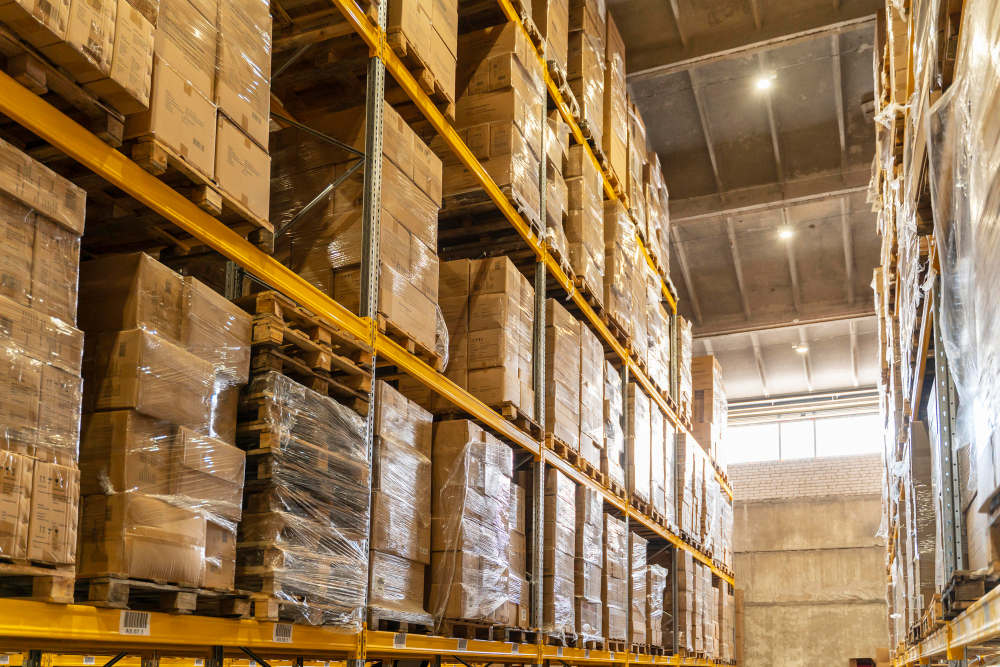
When excess inventory begins consuming warehouse space and working capital, many business owners start searching for “inventory buyers near me.” A nearby buyer can appear to be the simplest option: shorter transportation distance, easier communication and potentially faster pickup.
However, the closest buyer is not automatically the best buyer.
A local liquidator may understand the regional market and respond quickly, but it may lack the capital or resale network to purchase a large or specialized lot. A nationwide inventory buyer may have broader category experience and greater purchasing capacity, although the transaction can require more logistics coordination.
The right choice depends on the products, quantities, condition, location, timeline and resale restrictions.
This guide compares local and nationwide inventory buyers and explains how retailers, distributors, manufacturers, wholesalers and ecommerce businesses can select the right partner for a bulk inventory sale.
What Is an Inventory Buyer?
An inventory buyer is a business that purchases merchandise directly from another business for resale through secondary channels.
Inventory buyers may purchase:
- Overstock merchandise
- Closeout products
- Discontinued inventory
- Seasonal stock
- Customer returns
- Shelf pulls
- Damaged-box products
- Amazon FBA removals
- Cancelled-order inventory
- Retailer-rejected stock
- Mixed-SKU lots
- Warehouse clearances
- Business-closeout inventory
- Product samples and displays
A direct buyer uses its own funds to purchase the merchandise and assumes responsibility for storing and reselling it.
This model differs from a broker, auction or consignment platform. A broker attempts to find another buyer, while an auction or consignment company may sell the products on the owner’s behalf.
Before comparing offers, ask whether the company is purchasing the goods directly or acting as an intermediary.
What Is a Local Inventory Buyer?
A local inventory buyer primarily operates within a specific city, state or region.
Depending on its business model, a local buyer may:
- Visit the warehouse personally
- Inspect products before making an offer
- Purchase smaller lots
- Collect inventory using its own vehicle
- Resell through local discount stores
- Operate a regional warehouse
- Sell to flea markets or independent retailers
- Buy selected categories
- Complete same-day or short-notice pickups
Local buyers can be useful when the inventory is modest, time-sensitive or difficult to ship.
However, the phrase “local buyer” does not guarantee that the company owns a nearby warehouse or purchases inventory directly. Verify the business’s actual location, capacity and purchasing process.
What Is a Nationwide Inventory Buyer?
A nationwide inventory buyer evaluates and purchases stock from businesses across multiple states or throughout the United States.
Nationwide buyers may have:
- Larger purchasing budgets
- Broader resale networks
- Established freight relationships
- Experience with multiple product categories
- Capacity for pallets and truckloads
- Ability to coordinate pickups from several facilities
- Regional warehouse partners
- Export or secondary-market channels
- Experience with complex manifests
- Dedicated logistics coordination
A nationwide buyer does not necessarily send its own employees to every warehouse. It may use commercial carriers, freight brokers, third-party inspectors or regional receiving facilities.
The seller should confirm how inspection, payment and transportation will work before releasing the inventory.
Local vs Nationwide Inventory Buyers at a Glance
| Factor | Local Buyer | Nationwide Buyer |
|---|---|---|
| Geographic reach | One city, state or region | Multiple states or nationwide |
| Typical lot size | Small lots to pallets | Pallets, truckloads or warehouse lots |
| Physical inspection | Often easier to arrange | May use photos, manifests or third-party inspection |
| Pickup distance | Usually shorter | May require commercial freight |
| Product categories | May be specialized or limited | Often covers broader categories |
| Purchasing capacity | Varies and may be lower | Often suitable for larger transactions |
| Resale network | Primarily regional | Regional, national or international |
| Multi-location pickup | May be difficult | More likely to coordinate several facilities |
| Speed | Can be fast for nearby stock | Can be fast when documentation is complete |
| Best fit | Smaller, urgent or difficult-to-ship lots | Larger, complex or multi-state inventory |
These are general differences, not guarantees. Evaluate each buyer individually.
When a Local Inventory Buyer May Be the Better Choice
You Have a Small Inventory Lot
Commercial freight can reduce the recovery value of a small lot. If the inventory consists of several cases or one partial pallet, a nearby buyer may be able to collect it more economically.
The Inventory Is Difficult to Ship
Assembled displays, fragile merchandise, irregularly shaped products and unpackaged units may require expensive preparation.
A local buyer may inspect and remove these products without requiring the seller to package them for long-distance transportation.
The Warehouse Must Be Cleared Immediately
A nearby buyer may be able to respond quickly when:
- A lease is ending
- A store is closing
- A storage auction is approaching
- New merchandise is arriving
- A warehouse inspection is scheduled
- The business needs emergency space
Do not sacrifice appropriate documentation merely because the transaction is urgent. Confirm the products, quantities, price and payment terms in writing.
An In-Person Inspection Is Necessary
Products such as unmanifested returns, mixed salvage, open-box appliances or showroom units may be difficult to assess from a spreadsheet alone.
A local buyer may visit the facility and evaluate the physical stock.
The Products Have Strong Regional Demand
Some products perform better in specific climates, industries or local markets.
A regional buyer may understand the local demand for:
- Seasonal equipment
- Building supplies
- Outdoor products
- Regional apparel
- Agricultural goods
- Local-team merchandise
- Commercial equipment
When a Nationwide Inventory Buyer May Be Better
You Have Pallets or Truckloads
A larger buyer may have the capital, storage space and resale network needed to purchase a significant quantity through one transaction.
This can be more efficient than dividing the inventory among several small local buyers.
The Inventory Is Stored in Multiple States
Retailers, manufacturers and distributors may hold surplus products at:
- Regional warehouses
- Third-party logistics facilities
- Retail stores
- Amazon fulfillment centers
- Distributor locations
- Returns-processing centers
A nationwide buyer may be better equipped to coordinate multiple pickups and consolidate inventory.
The Lot Contains Several Product Categories
A local buyer may only purchase electronics, apparel or general merchandise.
Nationwide buyers with broader resale channels may evaluate mixed inventory containing:
- Home goods
- Toys
- Beauty products
- Tools
- Apparel
- Office supplies
- Consumer electronics
- Sporting goods
- Seasonal products
Always confirm which categories and conditions the buyer actually accepts.
Brand Protection Matters
A national or international resale network may provide more options for directing products away from sensitive channels.
For example, the seller may require:
- No resale on Amazon
- No public online listings
- No sales within a particular region
- Export-only distribution
- Removal of retailer labels
- No resale to existing accounts
- Confidential treatment of the brand
A broader buyer network can provide flexibility, but restrictions must be documented before the transaction.
The Business Needs a Repeatable Liquidation Partner
Businesses that regularly generate excess inventory may prefer a buyer capable of handling recurring transactions across multiple regions.
A repeat relationship can reduce the time spent verifying new buyers, explaining requirements and rebuilding the submission process for each lot.
Does a Nearby Buyer Always Mean Faster Pickup?
Not necessarily.
Pickup speed depends on:
- Buyer availability
- Purchase approval
- Payment terms
- Truck availability
- Warehouse appointment requirements
- Pallet preparation
- Loading facilities
- Number of locations
- Product condition
- Documentation quality
A nationwide buyer with established freight relationships may arrange pickup more quickly than a local company with limited vehicles.
Ask every buyer to provide a realistic pickup timeline after reviewing the manifest and warehouse requirements.
Does a Local Buyer Always Offer More?
No. Transportation distance is only one part of inventory valuation.
A buyer may consider:
- Product demand
- Brand
- Condition
- Packaging
- Quantity
- Number of SKUs
- Product age
- Remaining shelf life
- Resale restrictions
- Warehouse accessibility
- Testing requirements
- Freight expense
- Expected resale period
- Market saturation
A local buyer may have lower freight costs but fewer resale options. A nationwide buyer may spend more on transportation but recover stronger value through a broader customer network.
Compare the net offer and transaction terms rather than assuming one buyer type always pays more.
Step 1: Define the Inventory Before Contacting Buyers
Create a clear summary of what you need to sell.
Identify:
- Product categories
- Brands
- SKUs
- Quantities
- Condition
- Case packs
- Pallet count
- Warehouse location
- Product dates
- Original cost
- Suggested retail price
- Resale restrictions
- Required removal date
Separate different conditions instead of describing the entire lot as “overstock.”
For example, list new merchandise, shelf pulls, customer returns and damaged products separately.
Step 2: Prepare an Inventory Manifest
A detailed manifest enables both local and nationwide buyers to evaluate the opportunity efficiently.
Recommended columns include:
- Product name
- Brand
- SKU
- UPC, EAN or GTIN
- Category
- Quantity
- Units per case
- Case count
- Pallet count
- Condition
- Manufacturing date
- Expiration or best-by date
- Original cost
- Wholesale price
- MSRP
- Warehouse location
- Case dimensions
- Case weight
- Restrictions
- Notes
GS1 explains the identification keys commonly used to identify products and logistics units throughout the supply chain: GS1 Identification Keys.
If the stock is stored at multiple facilities, create a separate subtotal for every location.
Step 3: Take Current Photographs
Provide photographs of:
- Individual products
- Retail packaging
- UPC labels
- Date and lot codes
- Inner packs
- Master cases
- Full pallets
- Damaged packaging
- Customer returns
- Warehouse storage
- Loading area
Actual photographs reduce uncertainty and may allow a buyer to provide an initial offer without visiting the warehouse.
Do not rely exclusively on manufacturer images.
Step 4: Check for Product Restrictions
Before marketing the inventory, review:
- Retailer agreements
- Supplier agreements
- Marketplace restrictions
- Geographic limitations
- Minimum advertised price policies
- Export restrictions
- Trademark requirements
- Expiration dates
- Product recalls
- Required safety labels
The U.S. Consumer Product Safety Commission maintains a searchable database of consumer-product recalls.
Do not include recalled, unsafe, counterfeit or legally restricted merchandise in an ordinary liquidation sale.
Step 5: Search Beyond the Phrase “Near Me”
Local search results can help create an initial list, but do not limit the evaluation to the first nearby company.
Compare:
- Local buyers
- Regional buyers
- Nationwide direct buyers
- Category specialists
- Closeout companies
- Overstock buyers
- Returns liquidators
- Warehouse liquidation companies
A buyer several states away may provide a stronger overall transaction if it can purchase the complete lot and manage transportation.
Step 6: Verify Each Inventory Buyer
Before sharing confidential information or releasing merchandise, verify the company.
Check:
- Legal business name
- Physical address
- Website
- Business email
- Phone number
- Years in operation
- Product categories purchased
- Typical transaction size
- Direct-buyer or broker status
- Payment process
- Inspection procedure
- Freight responsibility
- References or reviews
If the buyer or carrier will collect the merchandise, transportation credentials can be checked through the Federal Motor Carrier Safety Administration’s SAFER system.
The carrier and inventory buyer may be separate companies, so verify the correct party.
Step 7: Ask Whether the Company Is a Direct Buyer
Ask clearly:
- Will your company purchase and own the inventory?
- Are you using your own funds?
- Are you presenting the lot to third parties?
- Is the offer firm or dependent on another buyer?
- When does ownership transfer?
- Who is responsible for payment?
- Will the products be shipped directly to another party?
A broker can still provide value, but sellers should understand the relationship.
Do not assume every website using “inventory buyers” purchases stock directly.
Step 8: Compare Written Offers
Every serious offer should identify:
- Products included
- Quantities
- Conditions
- Purchase price
- Payment timing
- Inspection rights
- Pickup date
- Freight responsibility
- Resale restrictions
- Quantity-discrepancy procedures
- Products excluded
- Transfer of title
Compare the complete transaction rather than only the total price.
One buyer may offer more but require the seller to pay freight. Another may purchase a smaller portion of the inventory, leaving the seller with low-demand products.
Step 9: Calculate Net Recovery
Use a simple net-recovery comparison:
Net recovery = purchase price − freight − handling − storage − commissions − preparation costs
Also consider:
- Time to completion
- Number of transactions
- Employee labor
- Products left behind
- Payment risk
- Brand risk
- Future disposal expenses
The highest gross offer may not produce the strongest net outcome.
Step 10: Confirm Payment Terms
Before pickup, document:
- Payment method
- Payment date
- Required inspection
- Deposit, if applicable
- Final payment conditions
- Discrepancy process
- Refund or adjustment terms
- Responsible legal entity
Avoid shipping merchandise based only on a verbal promise.
Do not pay unexplained upfront fees to receive an offer or “activate” a buyer.
Step 11: Confirm Logistics Responsibilities
Determine who will:
- Select the carrier
- Pay freight
- Schedule the appointment
- Provide the bill of lading
- Supply pallets or packaging
- Load the truck
- Insure the shipment
- Manage multiple pickups
- Handle detention or accessorial fees
- Confirm delivery
Provide accurate information about:
- Dock availability
- Forklift access
- Appointment windows
- Pallet dimensions
- Total weight
- Residential or limited-access locations
- Liftgate requirements
- Warehouse closing date
Hidden logistics requirements can delay pickup or change transportation costs.
Step 12: Protect Your Brand
Discuss resale channels before accepting an offer.
Potential restrictions may include:
- No Amazon resale
- No eBay listings
- No resale in a defined territory
- No sales to existing retail accounts
- Export-only distribution
- Removal of price labels
- Removal of retailer-specific packaging
- Confidential handling
- No public advertising with the brand name
Restrictions should be commercially reasonable, legal and documented in the purchase agreement.
A buyer cannot accurately value the inventory if limitations are introduced after the offer is made.
Red Flags When Choosing an Inventory Buyer
Unusually High Offer Without Product Information
A buyer cannot reasonably value a complex lot without understanding the products, quantities and condition.
Pressure to Ship Immediately
Do not release inventory before the terms, payment and receiving party are confirmed.
Upfront Evaluation Fees
Direct buyers generally evaluate inventory as part of their purchasing process. Investigate unexplained appraisal, processing or listing fees.
No Verifiable Business Identity
Be cautious when a company lacks a physical address, legal name or business contact information.
Vague Payment Terms
“Payment after processing” is not sufficient. Define what processing means and when payment will occur.
Repeated Last-Minute Changes
Offer adjustments may be reasonable when quantities or conditions differ materially, but unexplained reductions are a warning sign.
Refusal to Discuss Resale Channels
This is especially concerning when brand protection is important.
Buyer and Receiving Party Do Not Match
Ask why products are being shipped to a different company and document who owns and pays for the merchandise.
When to Use More Than One Buyer
A single buyer is not always the best solution for a mixed lot.
The inventory may be divided when:
- Categories have different specialist buyers
- Some products have geographic restrictions
- One buyer only wants new merchandise
- Customer returns require another channel
- High-value products deserve separate evaluation
- Certain products are stored in distant locations
- One buyer cannot purchase the full quantity
However, splitting the lot creates more transactions, freight arrangements and administrative work.
It may also leave the seller holding the least desirable products after the strongest inventory is sold.
Compare the additional recovery with the cost and complexity of managing several buyers.
How Inventory Buyers Near Me Can Help
Inventory Buyers Near Me helps businesses seeking buyers for overstock, closeouts, discontinued merchandise and other bulk inventory.
A useful submission should include:
- Product-level manifest
- Accurate quantities
- Condition details
- Product and pallet photographs
- Warehouse location
- Product dates
- Resale restrictions
- Preferred removal timeline
Whether the best solution is local, regional or nationwide depends on the inventory and the seller’s priorities.
When your information is ready, submit your inventory for evaluation.
Frequently Asked Questions
How do I find inventory buyers near me?
Search for local, regional and nationwide companies that purchase your product category and quantity. Verify whether each company is a direct buyer, review its location and request written transaction terms.
Is a local inventory buyer always cheaper for shipping?
Not necessarily. A nearby buyer may have lower transportation costs, but freight efficiency also depends on carrier relationships, truck capacity, warehouse access and the size of the shipment.
Do nationwide buyers purchase small inventory lots?
Some do, but nationwide companies often focus on pallets, truckloads or larger transactions. Ask about minimum quantities before preparing a shipment.
Can an inventory buyer collect products from several warehouses?
Some nationwide buyers coordinate multi-location pickups. Provide a separate manifest, pallet count and loading information for every facility.
Should I choose the buyer offering the highest price?
Compare net recovery, payment timing, freight responsibility, quantity purchased, products excluded, brand restrictions and transaction risk—not only the headline offer.
How quickly can bulk inventory be sold?
The timeline depends on product information, quantity, condition, buyer capacity and logistics. A complete manifest and current photographs can reduce evaluation delays.
What does a buyer need to make an offer?
Buyers typically need product descriptions, SKUs, UPCs, quantities, conditions, case packs, warehouse location, photographs, dates and resale restrictions.
Can I sell customer returns to an inventory buyer?
Some buyers purchase customer returns. Separate them from new merchandise and disclose whether the products are tested, untested, complete or damaged.
Who normally pays for freight?
It depends on the agreement. The buyer may arrange pickup, the seller may deliver or freight may be deducted from the offer. Confirm responsibility in writing.
How can I verify the carrier collecting my inventory?
Request the carrier’s legal name and USDOT number, then check the available registration and safety information through the FMCSA SAFER system.
Choose the Buyer That Fits the Inventory
Searching for inventory buyers near you is a reasonable starting point, but distance should not be the only factor in the decision.
A local buyer may be ideal for a small, urgent or difficult-to-ship lot. A nationwide buyer may provide greater capacity, broader category coverage and coordinated logistics for truckloads or multi-location inventory.
Prepare accurate documentation, verify each company and compare the complete net outcome. The right buyer is the one that can complete the transaction reliably while meeting your financial, logistical and brand-protection requirements.
Submit your excess inventory to request an evaluation.